

PRP (Pre-requisite Program) Validation in Your HACCP Study
March 9, 2023
Women in Agriculture -By Cherisse Burger
April 6, 2023
Noise in the Workplace
-By Rhelda Louw
We all know that at workers in the agricultural sector are often exposed to loud noises from machinery and equipment, such as tractors, spraying equipment, harvesters, and other machinery or equipment. Prolonged exposure to these noises can lead to hearing damage and loss, making it important for workers to use proper noise protection. But the million-dollar question is, how do I know when I need to provide noise protection to my employees?
The “noise rating limit” as stated in the Occupational Health & Safety Regulation 307 (Noise-Induced Hearing Loss Regulations) set 85dB exposure (8-hour rating level) as the level at which hearing loss/ damage can occur.
Here are a few examples of how long you may be exposed to noises. It’s important to note that these are just general guidelines, individual hearing sensitivity can differ.
- 85dB: up to 8 hours
- 91dB: up to 2 hours
- 94dB: up to one hour
- 100db: up to 15 minutes
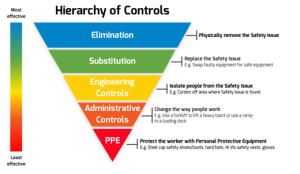
In this diagram we see that using PPE as a control measure should be the last resort. We should first consider.
- Eliminating the hazard
- Substituting the hazard
- Implement Engineering Controls
- Administrative controls
Only once we have considered all of the above, we should revert to the implementation of PPE.
Possible risk management solution may include:
- Use noise barriers: Erecting barriers around noisy equipment or work areas can help reduce the amount of noise that reaches workers. {Engineering Control}
- Use earplugs or earmuffs: Wearing earplugs or earmuffs can help reduce noise exposure to a safe level. Make sure to use the appropriate type of hearing protection for the specific noise level and frequency of the task being performed. {PPE Control}
- Maintain and repair equipment: Regular maintenance and repair of machinery can help reduce the amount of noise it produces. For example, worn out mufflers or loose belts can cause machinery to produce more noise than necessary. {Engineering Control}
- Rotate jobs: If possible, rotate workers between tasks that require less noise exposure and those that require more. This can help limit the amount of time each worker is exposed to loud noises. {Administrative Controls}
- Educate workers: Training workers on the importance of hearing protection and the risks associated with noise exposure can help increase awareness and encourage them to use hearing protection. {Administrative Controls}
It is also important to know that the Regulation 307 requires the employer to maintain a system of medical surveillance for all employees exposed to noise at or above the noise-rating limit. In addition to these tips, it’s important to monitor noise levels regularly and conduct hearing tests to identify any early signs of hearing loss. Include the monitoring activities as an administrative control in your Risk Assessment. By taking these steps, workers in agriculture can help protect their hearing and maintain their long-term health and well-being.
For any queries, please contact Rhelda Louw
consult2@skyvines.co.za